Commercial Real Estate Investments: Why Value-Add Industrial Assets Are Built for Long-Term Growth
Commercial real estate investments have long appealed to investors who want more than short-term market movement. For accredited investors, high-net-worth individuals, and experienced portfolio builders, the appeal often comes from the combination of tangible assets, income potential, professional asset management, and long-term value creation. That is where The Oak and Clay Group focuses its work: helping investors access disciplined, value-add commercial real estate opportunities designed around stability, growth, and risk-aware execution.
The current industrial real estate environment shows why experienced sponsorship and careful asset selection matter. JLL reported that U.S. industrial leasing activity increased 17.8% year over year at the beginning of 2026, with 145.2 million square feet of leases executed in Q1 2026 and a national industrial vacancy rate of 7.5%. Those figures point to a market where demand remains active, but where investors and operators must still make informed decisions about location, tenant needs, property condition, financing, and exit strategy.
Why Value-Add Commercial Real Estate Still Matters
Value-add commercial real estate is not simply about buying a property and waiting. It is an active investment strategy that seeks to improve an asset’s performance through better operations, leasing, renovations, repositioning, expense control, or a more strategic capital plan. In practical terms, this can mean transforming an underutilized warehouse, improving tenant quality, upgrading functionality, or positioning a property for stronger long-term demand.
J.P. Morgan explains that commercial real estate investment strategies often include core, core-plus, value-add, and opportunistic approaches, and notes that private equity real estate funds frequently focus on value-add or opportunistic investments for accredited investors seeking higher returns and willing to commit capital for longer periods.2 This aligns with the investment philosophy behind real estate private equity and commercial real estate investment partnerships, where capital, market knowledge, and asset management experience are brought together to pursue specific investment objectives.
Value-add strategy
Provides a path to improve asset performance rather than relying only on market appreciation.Hands-on asset management
Helps identify operational improvements, tenant opportunities, and capital planning needs.Industrial real estate demand
Warehousing, logistics, light manufacturing, and flex-space users continue to influence property demand.Local market knowledge
Strong execution depends on understanding submarkets, tenant behavior, access routes, and property fundamentals.Risk-aware investing
Disciplined underwriting, conservative assumptions, and clear exit planning help protect long-term investor goals.
Industrial Real Estate Investing and the Pittsburgh Opportunity
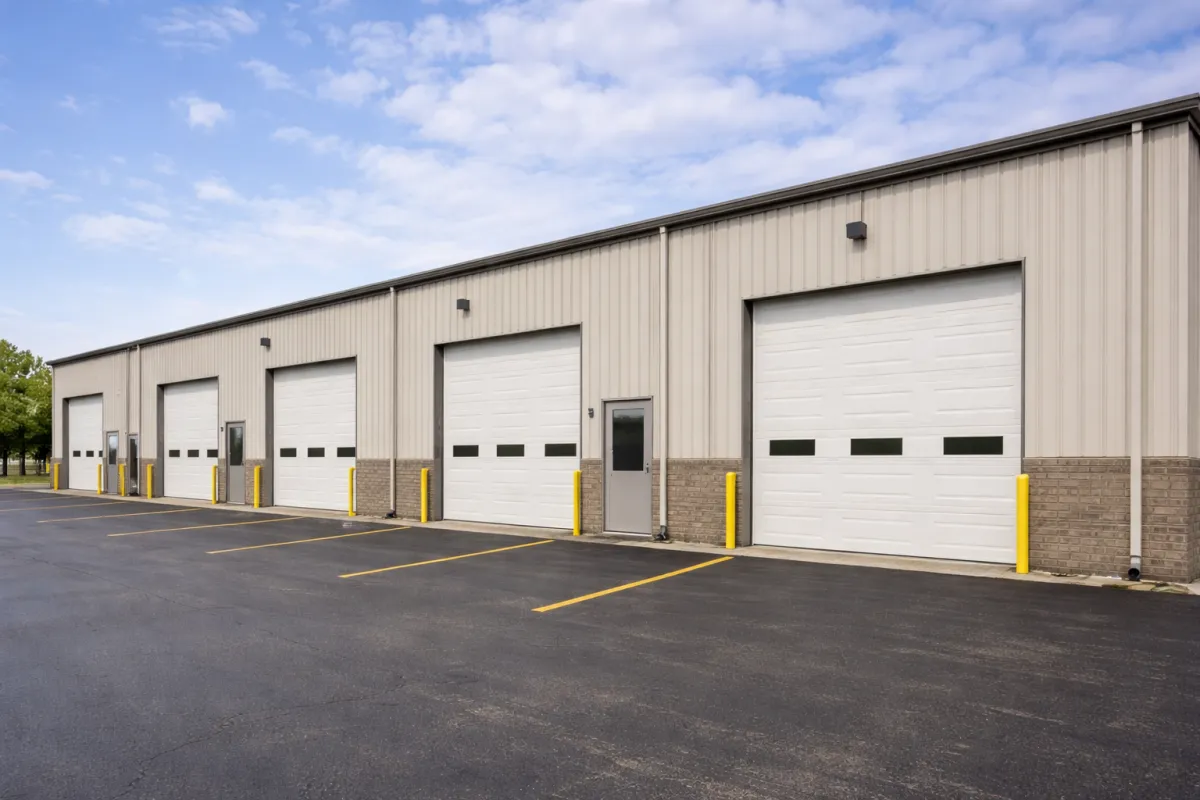
Industrial real estate investing has become especially important as businesses continue to evaluate warehouse, distribution, light manufacturing, and flex-office space. Modern users often need efficient layouts, strong access, drive-in doors, loading capability, and flexible footprints. For investors, these user requirements create opportunities to reposition older or underutilized industrial properties into more competitive assets.
Pittsburgh offers a compelling regional backdrop. The Pittsburgh Region notes that the broader region includes a diversity of commercial real estate, business parks, and industrial site options across a 10-county footprint with roughly 2.5 million people. It also highlights regional activity across advanced manufacturing, robotics, logistics, life sciences, energy, technology, transportation, and healthcare. For investors evaluating Pittsburgh commercial real estate or Pittsburgh industrial real estate, this mix of legacy infrastructure and future-focused industries creates a market where thoughtful property strategy can matter.
The Oak and Clay Group’s pre-leasing opportunity directly supports this market need. Businesses seeking warehouse space for lease in Pittsburgh can explore planned industrial space on the Northside of Pittsburgh, with flexible layouts from 1,000 to 10,000 square feet for uses such as warehousing, distribution, light manufacturing, and flex-office. This kind of smaller and mid-bay industrial space can be attractive to local operators that need efficient, accessible space without committing to oversized facilities.
For Warehouse Owners: A Confidential Path to Sell
Industrial owners are not always looking for a long public listing process, costly repairs, or uncertain buyer timelines. Some owners need a straightforward exit, a confidential conversation, or a direct buyer who understands warehouse and industrial assets. For those owners, The Oak and Clay Group provides a dedicated path to sell your warehouse fast through a direct, off-market, and confidential process.
This message is especially important for owners of older industrial buildings, family-held warehouse properties, partially occupied assets, or facilities that may need repositioning. The company’s warehouse seller page emphasizes competitive cash offers, no commissions, no repairs, flexible closing timelines, and a process designed around the owner’s goals. From an SEO perspective, this section should help the website rank for search intent related to sell industrial property as-is, confidential warehouse sale, and warehouse buyers in Pittsburgh.
For Accredited Investors: Access, Alignment, and Professional Execution
Many private real estate opportunities are intended for accredited investors. The U.S. Securities and Exchange Commission explains that the accredited investor definition helps determine who may participate in many private-market offerings. For individuals, the SEC lists financial criteria such as net worth over $1 million, excluding primary residence, or income over $200,000 individually or $300,000 with a spouse or partner in each of the prior two years with a reasonable expectation of the same current-year income.4
For investors who meet those requirements, accredited investor real estate opportunities can provide access to professionally managed investments outside of the public markets. However, access alone is not enough. Investors should look for a sponsor with disciplined underwriting, asset management experience, strong market relationships, and a clear investment thesis. The Oak and Clay Group emphasizes more than 25 years of real estate investment expertise, a national network of seasoned investors and operators, and a hands-on approach to transforming undervalued properties into higher-performing assets.
What is the strategy?
A clear explanation of whether the opportunity is value-add, income-focused, development-oriented, or opportunistic.How is risk managed?
Conservative underwriting, realistic rent and expense assumptions, contingency planning, and experienced operators.Who manages the asset?
A sponsor or team with hands-on asset management capability and relevant property experience.What is the timeline?
A practical hold period, capital plan, leasing strategy, and exit framework.How do I get started?
A simple way to request information, confirm investor qualifications, and discuss fit.
Building Long-Term Wealth Through Commercial Real Estate Partnerships
The strongest commercial real estate investments are rarely accidental. They are built through disciplined acquisition, patient capital, local market understanding, and consistent execution. In a market where industrial tenants are looking for better-functioning space and investors are looking for alternatives to public-market volatility, value-add commercial real estate can offer a practical framework for long-term wealth building.
For investors, The Oak and Clay Group offers a relationship-driven way to explore commercial real estate investment opportunities. For business owners and tenants, the firm’s Northside Pittsburgh warehouse space creates a path to secure flexible industrial space in a strategic infill location. For warehouse owners, the firm’s confidential warehouse sale process creates an alternative to the traditional listing model.
If you are an accredited investor seeking value-add commercial real estate, a business looking for warehouse space, or an owner considering a direct warehouse sale, now is the time to start the conversation. Join the investor network or contact The Oak and Clay Group to learn how disciplined commercial real estate partnerships can support your long-term goals.